Tiny Warriors Rush - Idle TD
- 4.0
- Rating
- 1.00M
- Installs
- Free
- Price

 Analysis by App-foxy
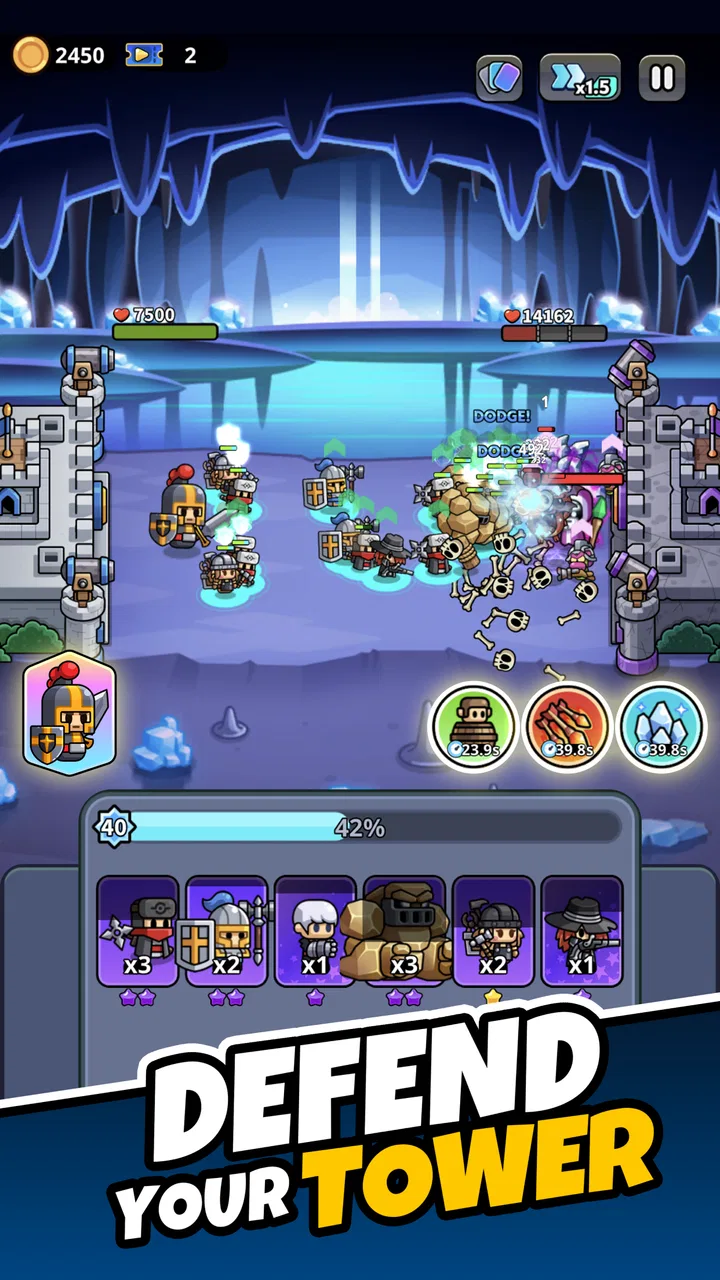
I approached Tiny Warriors Rush - Idle TD as the kind of strategy game you open when you want something active enough to hold your attention, but simple enough to manage in short visits. It puts castle defense at the center, with small enemy waves creating a steady stream of decisions rather than asking me to learn a complicated battlefield before I could enjoy it. That makes it easy to understand within minutes, although the real question is whether its idle structure gives you enough control to stay interested.
This is a free game from SayGames Ltd, rated for Everyone 10+, and it sits in a comfortable middle ground between an idle game and a traditional tower-defense title. The store page shows a 4.1 average from around 12 thousand ratings, while its audience has already passed the million-install mark. Those figures suggest that the basic idea is accessible, but they do not answer the more useful question: is this the right kind of strategy game for your routine?
How I Decide Whether It Is Worth Keeping
My first test with an idle tower-defense game is how much it respects short sessions. I want to be able to check progress during a break, make a meaningful improvement, and leave without feeling that I have abandoned a complicated campaign. Tiny Warriors Rush performs best under that condition. Its castle-and-wave setup is immediately readable, so I do not need to remember a large map or reconstruct a long chain of objectives every time I return.
You May Also Like

 Blood Strike: 2.5 Anniversary
Blood Strike’s Loadouts Turn Every Drop Into a Tactical Gamble
A close look at Blood Strike’s custom loadouts: how fast access to signature weapons reshapes its battle royale rhythm, rewards preparation, and narrows the gap between fights.

 Pandora - Music & Podcasts
Pandora’s Music Is Easy to Start, but Harder to Recover
Pandora’s strength is its low-effort path from a seed to a station. Its weak spot is how much confidence it asks you to place in connection, setup, and quiet recovery.

 8 Ball Pool
 Is Built on Rivalries, Rematches, and Routine
A close look at the rivalries, rematches, shared routines, and unanswered safety questions that turn a quick pool match into a persistent mobile community.

 Samsung Music
’s Quiet Strength Is Playing What You Already Own
Its reach comes less from spectacle than from dependable access to a personal library. That simplicity is both the app’s strongest retention engine and its ceiling.

 AccuWeather: Weather Radar
AccuWeather Review: A Quick, Clear Forecast for Everyday Decisions
For everyday plans, the best forecast is the one you can understand quickly. AccuWeather makes rain timing, radar, and local conditions easy to act on, with a few trade-offs.

 Hill Climb Racing
Why Hill Climb Racing Still Turns Crashes Into One More Run
A tiny car, a bumpy hill and one more upgrade: Hill Climb Racing keeps resurfacing because its simple chaos makes every near-miss feel personal.
More From Our News Desk



The second test is whether the idle layer supports the strategy instead of replacing it. Automatic progress can be relaxing, but it can also make a game feel like a screen that waits for me to collect something. Here, I paid attention to the moments around each wave: when to strengthen the defense, when to save resources for a more noticeable improvement, and when a small upgrade is preferable to spreading progress too thinly. Those choices are what keep the game from becoming completely passive.
The third test is patience. Free mobile strategy games often build their rhythm around repeated upgrades, and that can feel rewarding or repetitive depending on what you expect. If you want a fast, competitive tower-defense challenge with constant repositioning, this is probably not the first game I would suggest. If you like watching a defense grow and making occasional decisions that improve its ability to handle the next push, the format makes more sense.
I also consider how much attention a game demands from the player. This one is a practical fit for someone who prefers compact decisions over a full evening of concentration. I could play it while waiting for an appointment or during a short commute, provided I was comfortable with a slower, incremental pace. It is less suitable when I want a long session built around a carefully designed level, a story campaign, or a head-to-head contest where every move has immediate consequences.
The Castle Is the Main Reason to Return
The central appeal is the feeling of maintaining a defense against repeated pressure. Tiny enemies make the battlefield easy to read, and that clarity matters on a phone screen. I never felt that the basic premise was hidden behind unnecessary explanation: the castle is vulnerable, waves arrive, and my job is to make the defense stronger before the next serious test.
That simplicity is not the same as emptiness. The useful decision is often not “what can I tap right now?” but “which improvement will make the next stretch less troublesome?” I found it more satisfying to think in terms of a defense plan than to spend every available resource immediately. Saving for a stronger improvement can be worthwhile when a smaller purchase would only postpone the same problem.
One practical habit helped me: I treated each return visit as a review of the defense rather than an automatic collection routine. I checked what had changed since my last session, looked for the upgrade that addressed the current pressure, and then watched the next wave long enough to see whether the decision actually helped. That small pause makes the idle format feel more strategic and prevents random tapping from becoming the entire experience.
The strongest part of the design is the handoff between waiting and deciding. The game can make progress while I am away, but it still gives me a reason to come back and adjust the direction of that progress. Players who enjoy gradual optimization will understand the appeal quickly.
Where It Wins Against Familiar Alternatives
Compared with a classic level-based tower-defense game, this is easier to pick up and less demanding on time. Traditional alternatives often ask me to study a fixed map, place defenses precisely, and replay a stage until I understand its enemy pattern. That can produce deeper tactical moments, but it also requires a more deliberate session. Tiny Warriors Rush is better when I want the castle to remain a continuing project rather than a puzzle I must solve in one sitting.
Against a purely idle game, it has a clearer sense of threat. The incoming waves give my upgrades a purpose, and the defense theme makes progress easier to understand than a collection of abstract numbers. I am not simply increasing a figure because the interface says so; I am trying to keep the castle prepared for what is coming next. That context gives the waiting period more meaning.
It also suits people who enjoy strategy but do not want a large roster of systems to memorize. I did not need to approach it like a spreadsheet or study a complex competitive meta before making sensible choices. The trade-off is that players who want extensive customization, elaborate maps, or highly specialized unit combinations may find the streamlined structure too narrow.
For a parent looking for a game rated Everyone 10+, the age category may make it easier to consider for a younger player, but I would still pay attention to the way the individual uses in-app purchases. The game is free to start, and the available purchases range from $0.99 to $99.99 per item. That broad range is important for family devices: I would check purchase controls before handing over the phone, rather than assuming that a child will understand the difference between a small optional buy and a much larger one.
Small Habits That Improve the Experience
My first useful tip is to avoid treating every available improvement as equally urgent. In an idle defense game, the most visible button is not always the best long-term choice. I got better results by asking which weakness was actually causing trouble. If the castle was surviving comfortably, I preferred to build toward a stronger threshold instead of spending just to make the current screen look busier.
My second tip is to use short observation sessions. After making an upgrade, I did not immediately close the game every time. Watching part of the next wave helped me judge whether my choice changed the situation or merely produced a temporary feeling of progress. This is especially useful for players who are tempted to spend resources impulsively, because it turns each purchase into a small experiment.
A third insight is that the game works better when I give it a place in my routine. I would check it after finishing a task, collect what had accumulated, make one or two deliberate decisions, and leave. That pattern kept the idle mechanics convenient instead of letting them become a reason to stare at the screen repeatedly. It is a good example of a game that benefits from boundaries: the less I forced it into a long session, the more comfortable its pacing felt.
There is also a useful distinction between progress and engagement. The castle may continue moving forward when I am not playing, but that does not mean every return visit will deliver a dramatic moment. Some sessions are mainly maintenance. I think it is better to enjoy the gradual improvement honestly than to expect every launch to feel like a major tactical breakthrough.
What May Frustrate You
The same simplicity that makes the game approachable can limit its appeal. If you prefer tower defense because of precise placement, unusual enemy behaviors, or carefully balanced maps, the idle structure may feel too hands-off. The game gives me a broad defensive problem, but it does not aim to replace a full strategy campaign with detailed battlefield engineering.
Repetition is another consideration. Wave-based progression naturally revisits the same basic idea: prepare, defend, improve, and prepare again. That loop can be soothing when I want a low-pressure game, but it may lose its charm if I need constant novelty. I would not choose this as my only strategy title if my main goal were variety from one level to the next.
The free-to-play structure also deserves a realistic look. I could approach the game without paying, but the presence of in-app purchases means some players may feel tempted to speed up progress or remove friction. I recommend deciding in advance whether you are comfortable with the normal pace. If you are, the game is easier to enjoy on its own terms. If you expect every delay to be bypassed, the cost can become part of the experience rather than a minor optional detail.
Another limitation is that the game is more about ongoing improvement than a clearly defined finish line. That is ideal for people who like a persistent project, but less satisfying for anyone who wants to complete a sequence of polished stages and feel that they have reached a conclusive ending. Before installing, I would ask myself whether I want a game to maintain or a game to conquer.
Is Changing From Another Strategy Game Worth It?
If you are coming from a conventional tower-defense game, switching is easy at the control level but significant at the expectation level. You will likely understand the castle defense immediately, yet you should not expect the same intensity from every session. The cost of switching is giving up some hands-on control in exchange for convenience and a more forgiving rhythm.
If you are coming from an idle clicker, the change goes in the opposite direction. You gain a clearer defensive objective, but you may need to pay more attention to how improvements affect incoming waves. That extra context is a benefit if you want your idle progress to feel connected to a problem. It is a drawback if you prefer completely passive accumulation.
If you already play a competitive strategy game, I would treat this as a companion rather than a replacement. It is useful for low-energy moments when I still want a strategic theme, but it does not offer the same pressure as a game where another player reacts to my decisions. Keeping both types installed can make sense: one for focused competition, this one for relaxed progression.
Moving from another free game also means accepting a new progression rhythm. I would not delete a favorite title immediately. I would first play this one through several ordinary short sessions and see whether I look forward to making the next defensive decision. The deciding factor is not how exciting the first few minutes feel; it is whether the wave-and-upgrade loop remains pleasant after the novelty of the tiny warriors wears off.
Device Fit, Version, and Everyday Use
The current version is 1.13.0, and the game requires Android 8.0 or later. That makes the compatibility check straightforward for Android users: an older phone may be excluded even if it handles other simple games comfortably. I would check the operating system before planning to install it, especially on a spare family device or an older handset.
Because the game is built around brief returns, it fits well on a phone that is used throughout the day rather than reserved for long gaming sessions. My most natural scenario was opening it after a short interruption, reviewing the castle, making a targeted improvement, and closing it before the game started competing with whatever I was supposed to be doing. That is a better use case than expecting a deep, uninterrupted evening from it.
The 1M+ install milestone and the 4.1 average rating show that the concept has reached a substantial audience, but I would not use popularity as a substitute for personal fit. The important question is whether you enjoy incremental defense. A widely installed game can still feel slow to someone who wants direct control, while a modest-looking idle title can become a comfortable daily habit for the right player.
My Recommendation
I recommend Tiny Warriors Rush - Idle TD to players who want a free strategy game that can be checked in short bursts, especially those who like watching a castle become more capable over time. Its best quality is the balance between low effort and occasional decision-making. I could leave it alone for a while, return without feeling lost, and still have a clear reason to think about the next improvement.
I would skip it if your ideal tower defense depends on detailed placement, fast reactions, deep level variety, or competitive opponents. I would also be cautious if you dislike idle progression or find in-app purchase prompts distracting. In those cases, a traditional stage-based tower-defense game may give you more control, while a purer idle game may offer a smoother passive experience.
For everyone else, the sensible approach is to start without spending and judge the normal progression first. Set purchase protections if the device is shared, and use the defense-review habit rather than tapping every upgrade immediately. That lets you discover whether the game’s slower rhythm works for you before money becomes part of the decision.
My final view is positive but specific: this is not a replacement for every strategy game, and it does not try to be. It is a compact castle-defense routine for players who enjoy small choices, recurring waves, and progress that continues between visits. If that sounds like the kind of game you want beside your everyday schedule, SayGames Ltd has made an approachable option. If you need constant tactical control, look elsewhere; the right reason to install it is convenience with just enough strategy to make returning worthwhile.
FAQs for Tiny Warriors Rush - Idle TD
01What is the main objective of Tiny Warriors Rush - Idle TD?
Tiny Warriors Rush - Idle TD combines tower defense and idle gameplay mechanics. Players are tasked with strategically placing warriors to defend against waves of enemies. As you progress, you can upgrade your warriors and unlock new abilities, making it essential to plan your defenses and manage resources effectively.
02Is Tiny Warriors Rush - Idle TD suitable for casual gamers?
Yes, Tiny Warriors Rush - Idle TD is designed to appeal to both casual and dedicated gamers. Its idle mechanics allow progress even when you're not actively playing, making it perfect for those who prefer a more laid-back gaming experience. The strategic elements add depth for players seeking a challenge.
03Are there in-app purchases in Tiny Warriors Rush - Idle TD?
Tiny Warriors Rush - Idle TD offers in-app purchases that can enhance gameplay. Players can purchase items such as power-ups or currency to speed up progression. However, these purchases are optional, and players can enjoy the full game experience without spending money by investing time and strategy.
04Does Tiny Warriors Rush - Idle TD require an internet connection?
Tiny Warriors Rush - Idle TD can be played offline, allowing you to enjoy the game without an internet connection. However, certain features, such as leaderboards or special events, may require internet access to function properly. This flexibility makes it convenient for on-the-go gaming.
05How customizable are the warriors in Tiny Warriors Rush - Idle TD?
The game offers a variety of customization options for your warriors. You can upgrade their abilities, change their equipment, and unlock special skills. This allows you to tailor your defense strategy to suit different enemy types and challenges, providing a personalized gaming experience.
Pros
- Engaging gameplay with simple mechanics.
- Vibrant graphics enhance the experience.
- Quick sessions ideal for short breaks.
- Frequent updates with new challenges.
- Easy to learn for all age groups.
Cons
- In-app purchases can be pricey.
- Requires constant internet connection.
- Limited customization options.
- Repetitive levels may bore some players.
- Ads can disrupt gameplay flow.

Tiny Warriors Rush - Idle TD
Gallery